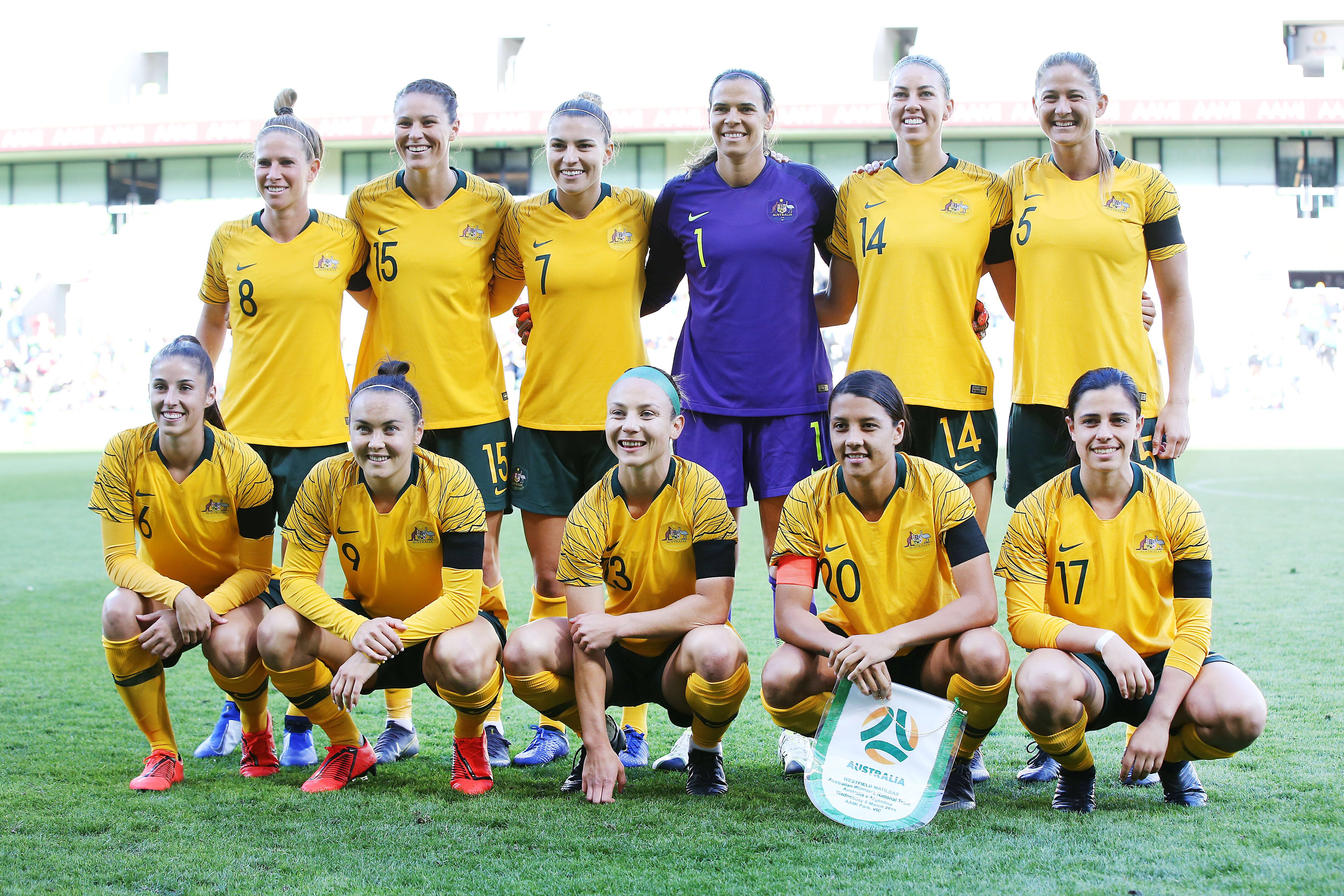
There are rising interests in women’s sport in the world, particularly in Europe, Canada, Australia, and the United States. This movement can be seen in the international conferences on women and sport. The International Working Group on Women and Sport (IWG) was established at the first World Conference on Women and Sport held in Brighton, UK in 1994. The IWG is an independent body of governmental and non-governmental organisations which aim to empower women around the world and improve their opportunities in sport. To enhance the continued growth of women’s sport worldwide the IWG hosts an international conference every four years, to discuss how to create better opportunities for female athletes and find solutions on issues regarding women’s sport.
Sport has the ability unlike nothing else in the world to connect people from different countries, cultures and communities. Nelson Mandela famously said after receiving the Laureus Lifetime Achievement Award in 2000; “Sport has the power to change the world. It has the power to inspire. It has the power to unite people in a way that little else does. It speaks to youth in a language they understand. Sport can create hope where once there was only despair.” Female athletes worldwide were made to feel inspired, and feel they could create a career through sport, only to be stereotyped for decades and never see opportunities arise.
In the UN Women article ‘Empowering women through sport’ Phumzile Mlambo-Ngcuka, Executive Director of UN Women spoke about the stereotypes female athletes face and how female athletes are the best role models for the youth.
“Stereotypes, discriminatory social norms and a lack of representation remain some of the most pervasive barriers to gender equality around the world,” she said.
“Even when laws and policies are in place, deep-seated attitudes about gender roles can hold back substantive change.
“We need visible role models of women athletes excelling on the pitch, in the arena and on the Olympic podium, so that girls see, and believe in their capabilities.”
Today women are now seeing these opportunities emerge around the world with the development of professional competitions and growing events for women in the Olympics.
Background
Throughout history women in sport have always fought for the same recognition as male athletes for decades. In the 1930’s women started having athletics and track and field clubs established in Australia. It wasn’t until the 1970’s when male and female ‘only’ clubs started to merge. Then in 1985 one of the greatest leaps for women sport in Australia, when Dawn Fraser became the first female inductee into the Australian Hall of Fame. The growth and acceptance of women’s sport was initially quite slow, however the movement has been gaining impetus, due to a wide range of societal factors.
In the ‘Empowering Women in Sports’ report it states that in Australia throughout ‘1993 only 5 per cent of televised sports news covered women’s sports’. This study shows the uphill battle female athletes faced to receive recognition for their achievements in the sporting community, only three decades ago. The situation in Australia for female athletes didn’t improve for almost 20 years. A report in 2010 stated that of all sport-related coverage in the Australian media, only 9 per cent related to women’s sport.
However, 2010 was a monumental year in the development and growth of women’s sport in Australia. The W-League was currently in the inaugural season and introduced as the first professional domestic league for women in Australia. Yet the most pivotal event to occur was the fifth IWG World Conference on Women and Sport was held in Sydney between the 20th-23rd May. This conference worked as a catalyst to provide impetus on the movement of women’s sport in Australia. Almost a decade on since the IWG conference in Sydney there have been an addition of five professional competitions in Australia for women and our national teams in Football, Rugby, Tennis and Netball have achieved outstanding achievements on the national stage. Such achievements include; the Matildas ranked sixth in the world going into the Women’s World Cup and Ash Barty winning the French Open. These achievements are inspiring young women to pursue and believe in having a successful sporting career in Australia.
Media
Sport holds a significant place in the Australian community, as does the media, which is responsible for communicating the importance of sport in our lives. Just as sport is critical to the media, the media is critically important to sport. Women throughout the years have made significant contributions to Australian sport, however female athletes have yet to achieve equality with male athletes in the media.
Annemarie Failla, Journalist from The Female spoke about the influence the media can have on the development of women’s sport and how media can change the stereotypes of female athletes.
“Consistent media coverage can assist in providing a sport with profile, positive role models, increased spectator appeal and lucrative sponsorship opportunities,” she said.
“Female sport lacks the appeal of male sporting events and as a result of this, suffers sponsorship problems.
“As the media is a strong form of communication to the public, the way a sport or athlete is portrayed by the media can also impact on the credibility of that sport or sporting personality.
“With that in mind, we need to question what images of female athletes are commonly presented to readers and viewers.”
The media must play a significant role in the continued growth and development within women’s professional sports, however the Australian community also has a vital role to play.
Female sport still has much to achieve and now with more professional domestic competitions and opportunities for athletes in Australia, the sporting community must embrace and support the growth of women’s sport in Australia.
Opportunities
A decade ago the W-League was introduced into Australian sporting community and was the first highly developed professional domestic league for women in Australia. Now in the last five years there has been an introduction of five professional leagues and competitions for women including; Women’s Big Bash League (WBBL), Australian Football League Women’s (AFLW), National Rugby League Women’s (NRLW), State of Origin Women’s and Suncorp Super Netball.
The introduction of multiple professional competitions for women allows young female athletes to have dreams of being a professional athlete and continuing the development of women’s sport in Australia.
Hayley Walsh, Nepean FC U16 Girls Assistant Coach spoke about the opportunities young women are being presented with due to the growth of domestic leagues in Australia.
“It’s incredible to see the opportunities that are presented to young women across Australia due to the growth of domestic professional leagues, not only for Football but across a variety of sports,” she said.
“Australia is known for growing and nurturing some of the worlds greatest athletes, but in sports such as football many didn’t get an opportunity because the domestic league was non-existent, and trialling overseas was an expensive option and never a sure thing.
“When I was coming through club and representative as a young prospect, my opportunities were minimal, and I was never able to achieve my goals professionally in sport.
“I’m constantly encouraging my players to always take their opportunities because it can be taken away from you in a second, especially as a female athlete.”
There are exciting times ahead for female athlete in Australia with the constant development and speed in which women’s sport is growing in Australia. Young women across Australia can inspire to be professional athletes and showcase their skills and talents developed through hard work and dedication. The Australian sporting community will be rewarded with their impact on supporting the growth of women’s sport within Australia.
Equality
Women in sport have faced major inequality in comparison to their male counterparts. This inequality is still experienced today and is continually protested by female athletes worldwide. There are multiple professional domestic leagues, TV exposure is significantly higher than in 2010 and the youth now have vital female athletes as role models to be inspired by. However, there are still major inequalities faced by female athletes including media coverage, pay and stereotypes on social media.
According to the Commonwealth Bank Women in Sport 2019 Study, which was undertaken by ACA Research in December 2018, saw 1,023 Australians over the age of 18 take part, found:
- Increased interest in women’s sport is being driven by greater exposure through TV broadcasting (31 per cent), more positive media coverage (30 per cent) and the rise of high-profile female athletes in Australia (21 per cent).
- Coverage of women’s sport grew in the past 12 months with fans having access to every W-League, WBBL, Super W and AFLW game through either streaming or TV.
- Cricket was one particular sport that saw ground-breaking records as 2.5 million Aussies tuned in to the opening WBBL match while Australia’s matches have attracted an average national audience of more than 200,000.
These statistics in the ‘Commonwealth Bank Women in Sport 2019 Study’ suggest that there has been a significant increase from the 9 per cent of coverage given to women’s sport in the media in 2010. This is important in giving needed exposure to female athletes across Australia and showcase that young women can create a career as a professional athlete in Australia.
The Women’s World Cup 2019 is set to begin on the 8th June in France. It will be the first Women’s World Cup that will be accessible to every Australian school via Optus Sport. The Matildas can inspire Australia’s next generation of footballing stars on the worlds biggest stage.
Cheryl Salisbury, former Matildas player spoke on Optus Sports ‘Special World Cup Preview Podcast’ about the opportunities young women now have and how it could change their lives.
“Young girls are going to grow up and watch this World Cup, see the exposure, what women can do … the sky is the limit,” she said.
“I didn’t know what the limit was, I only saw men and boys with the pathways growing up.
“To have every game televised, young girls growing up now, being able to watch that, it is something massive. It could change their lives.”
A major inequality currently between female and male athletes in Australia is the pay gap for each sport. Female athletes are paid significantly less then their male counterparts and it has been a topic of discussion for decades in the Australian community. This week Professional Footballers Australia joined the bid for equality announcing they are prepared to take FIFA to court if the game’s governing body does not provide female footballers with equal pay at a World Cup. The current prize pool for the winners of the Women’s World Cup in France is only 7.5 per cent of what was available for the men’s event in Russia last year. The Matildas are currently taking home $43 million to compete in France, however the Socceroos made $575 million for the same competition. The PFA are campaigning to immediately increase the salary pool $82 million. It is likely this campaign will be met with some hostility even though the increased salary would still be a fraction of the male salary. To put this into context, even if the Matildas win the Women’s World Cup, the Socceroos will still have taken home more money from the 2018 World Cup than the Matildas. However, not all sporting codes in Australia are still avoiding the topic of equal pay. In 2017 Cricket Australia (CA) and the Australian Cricketers’ Association (ACA) reached a deal to ensure all Australian cricketers, regardless of gender, would receive equal pay on signing. This was a big step toward reaching equality between male and athletes throughout Australia. Although, other sporting codes are yet to follow in the foot steps of the ACA, the momentum is building and soon all sporting codes in Australia will be equal pay between both genders.
In the Australian sporting community female athletes are constantly trying to break the stereotypes associated with women’s sport. Currently the women’s sporting world is riddled with sexist stereotypes that are detrimental to its growth and development. These include the masculinity of specific athletes, lack of skill in comparison to male athletes and the overall entertainment of women’s sport. These stereotypes have been surrounding women’s sport in Australia for decades and are still haunting female athletes in modern society.
In March this year Channel 7 came under fire from the Australian sporting community after they removed a photo of Carlton Women’s player Tayla Harris that was uploaded onto their ‘7AFL’ social media page. The photo was getting trolled with degrading and offensive comments directed at the AFLW player. However, instead of removing the trolls and the negative comments, Channel 7 removed the photo entirely and that is when the backlash against the news station began. The public argued that Channel 7 was stereotyping the AFLW star as they wouldn’t remove a photo of a male athlete, regardless of the comments made on the photo. Tayla Harris and Sam Kerr (Matilda’s player) were strong campaigners against the trolls and Channel 7, with Tayla uploading the photo to her social media page with the caption ‘Here’s a pic of me at work … think about this before your derogatory comments, animals’. The Australian community rallied behind the athletes and showed full support for Tayla following the events. Channel 7 eventually came out and apologised saying “We’re sorry. Removing the photo sent the wrong message”.
Regardless of the steps made by sporting codes and the Australian sporting community within the last 15 years, the inequalities between female and male athletes in Australia is still significantly greater than it should be. It will potentially be decades still until we see male and female athletes recognised as equals, however Australia must continue to close the gap and continue to give the support necessary for growth and development of women’s sport in Australia.
 The Exponential Rise of Women’s Sport in Australia