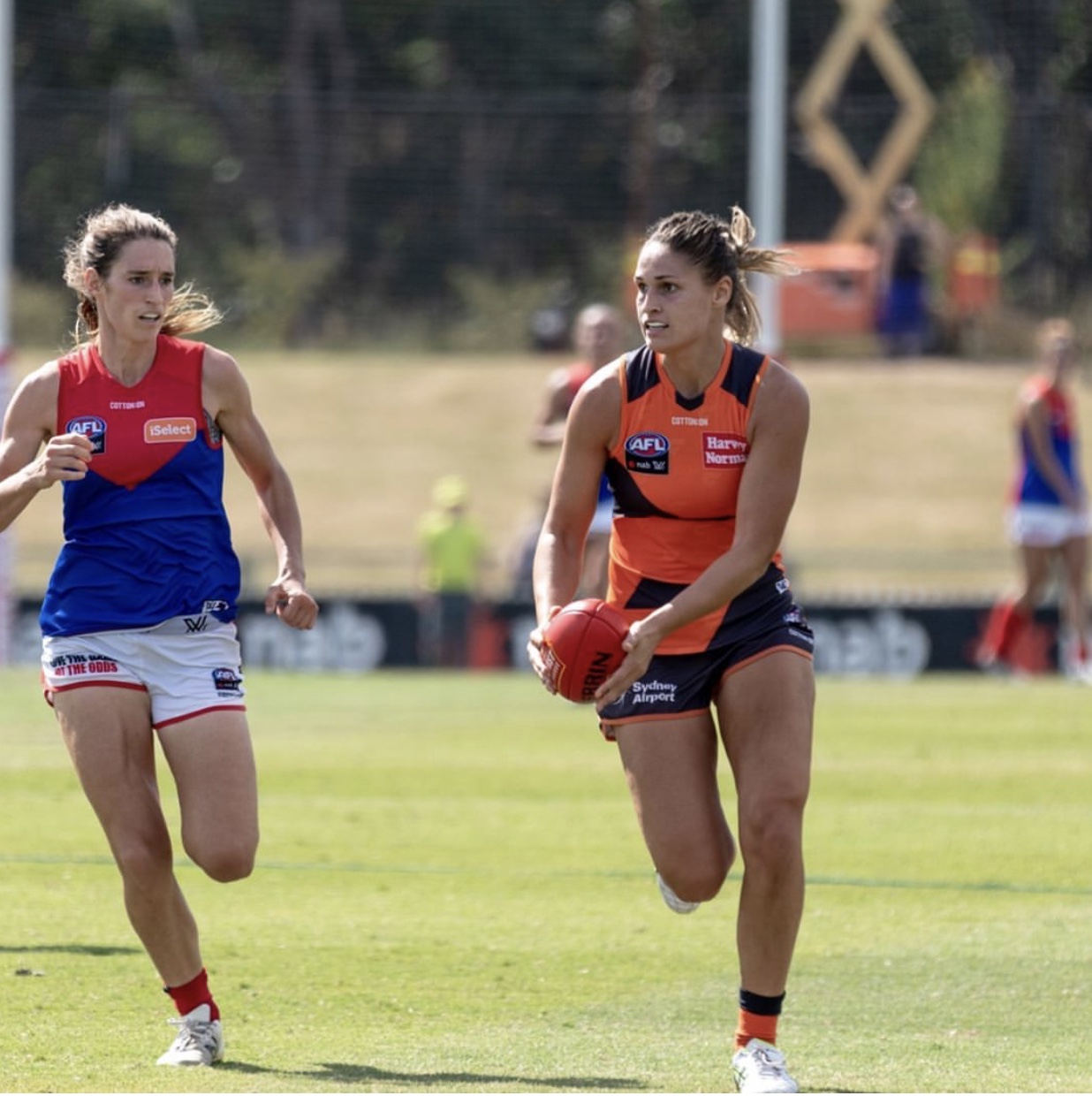
Loise Stephenson is a 24-year-old professional female player for the Greater Western Sydney Giants in the AFL Women’s (AFLW) competition. Louise was born in Melbourne and grew up playing Soccer until she was 14-years-old and switched to play for St Damians Junior Football Club in Bundoora.
Louise never believed she would have a career in the sport due to the lack of coverage of female athletes and opportunities in Australia for women in AFL.
“There definitely was doubt about having an opportunity to play sport professionally,” she said.
“I never really thought it was a career choice as I never saw female athletes on TV, but I would’ve loved to have seen this. I certainly didn’t think I could play professionally in Women’s AFL.”
AFLW is an Australian Football League for women which began in 2017, with eight teams in its inaugural season. This year the AFLW expanded to 10 teams in the competition and by 2020 the league will continue its growth, expanding to 14 teams in its fourth season.
The game has been slightly modified for women with quarters 15 minutes long (instead of 20 minutes in AFL), 16 players on the field (AFL has 18 players) and five interchange players (four in AFL). The length of the season has also been shortened with the AFLW playing less than 10 rounds in the 2019 season, whereas the AFL season is 23 rounds. On average women in the AFLW are making over $18,000 with Marque players making $27,000. It is a stark comparison to some of the males in the AFL who are on million dollar a year contracts. The AFLW is still in its development stage and hopefully soon the women and men will be playing a similar season and earning equal pay.
With the introduction of the AFLW and other professional domestic leagues within Australia, Louise sees the opportunities that are opening for young women.
“Young women and girls have plenty of opportunities to chase their dream of playing professional sport in Australia,” she said.
“There are now established and strong pathways for young women and girls across most sports, not just within netball or other female dominant sports, and this is continually growing.
“I have worked incredibly hard to be where I am today. I was never the strongest kicker or the smartest player, so I have worked on those things a lot and I am still learning. It has all been worth it though.”
The introduction of the AFLW competition in 2017 has paved the way for many female athletes inspired to be great players. It has also been a catalyst for providing the opportunity and the pathway towards having a professional playing career in Australia. Despite a shorter season and a serious pay difference to their male counterparts, the introduction of the AFLW is a strong starting point for the growth of women’s sport in Australia.
With the addition of two more clubs in the 2019 AFLW season and four more again next year, the opportunities and positions for female athletes is growing rapidly within Australia.
Louise spoke about the changing attitudes towards women in the sporting community and the praise female athletes are receiving with the growth of women’s sport.
“I think awareness across generations has increased dramatically. Those that are typically in the mindset that women should not be playing sport, or think it seems wrong, are now changing their opinion after seeing how talented and exciting our female athletes can be,” she said.
“Many people are now praising women for being stellar role models to young girls and boys, and not giving in to the pressures from those who don’t believe in us.
“We need Australians to love following and supporting women’s sport in their own time. Naturally it would not do us any good to force people to start watching without having a choice.
“This will ensure women’s sport is not just here for right now but continues to grow for future generations.
“Women need more opportunities to train and play professionally to be the best athletes they can be. The sooner the pay gap is met, the more opportunities women will have to be full-time athletes and train as many hours as our male counterparts.”
Louise believes that women’s sport in Australia has come a significant way and the growth is continuing rapidly.
“More sports have come into the spotlight (NRL for example) following the growth in AFLW and women’s cricket. It’s an exciting time,” she said.
“I think it is on the rise because there have been many people, men and women, behind the scenes working for many years to try to expose Australia and the world to our fantastic female athletes, and finally the time has come where people have started to listen, watch and support.
“I think it can be very soon, granted we have the right people standing up for us, and believing in us.
“We saw Cricket Australia bridge a large gap, and Surfing Australia do the same.
“It’s only a matter of time until other sports, like the AFL, realise that women’s professional sport is here for the long run, and it’s only going to get better the more females are able to train and play.”
Louise does believe that women in Australia should receive more recognition of their achievements from the media but doesn’t want young women to think it’s not possible to have a career in sport.
“It is a real shame the media do not highlight these achievements enough,” she said.
“I would say to continue to follow your dream, no matter what criticism or adversity you may face in doing so.
“Continue to enjoy playing the sport because that’s the reason we start playing in the first place!”
The introduction of the AFLW league and the continued growth to expand to a 14-team competition by 2020 is important for women’s sport in Australia. The driving force behind the growth in Australia is creating opportunities for women that previously didn’t exist.
 The Exponential Rise of Women’s Sport in Australia